Wired to Hold: The Neuroscience and Identity Behind Pege Token's Most Committed Investors

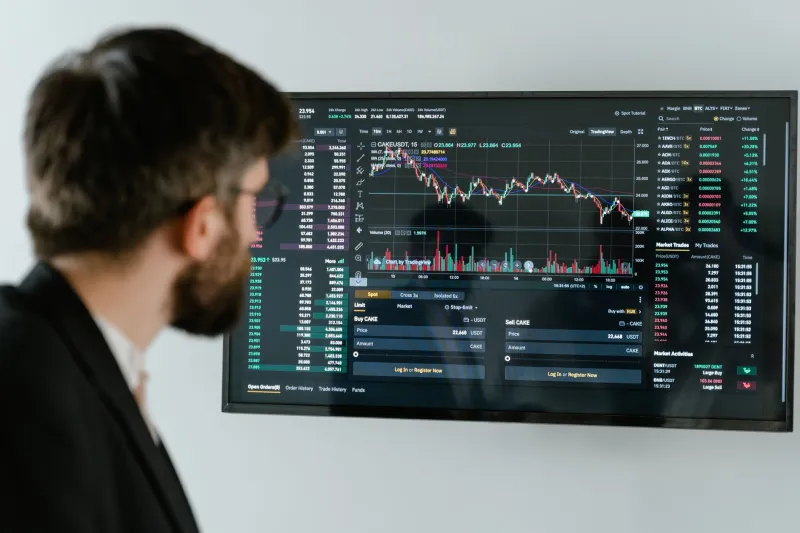
Every significant market correction produces the same split-screen moment: one group of Pege Token holders watches the price chart with something approaching calm, while another group hovers anxiously over the sell button. The gap between these two responses is rarely explained by the quality of their research or the size of their portfolios. More often, it is explained by what is happening inside their heads.
Behavioral economists and neuroscientists have spent decades mapping the cognitive architecture that governs financial decision-making under stress. What they have found is both humbling and instructive—and it maps with striking precision onto the behavioral patterns observed within the Pege Token holder community.
The Neurological Cost of Watching Red Numbers
Loss aversion is among the most replicated findings in behavioral finance. First documented by psychologists Daniel Kahneman and Amos Tversky, the principle holds that the emotional pain of losing a given amount of money is roughly twice as powerful as the pleasure derived from gaining the same amount. For cryptocurrency investors, who routinely experience double-digit percentage swings within a single trading session, this asymmetry creates a neurological environment that is almost purpose-built for poor decision-making.
Dr. Melissa Hartwell, a behavioral economist at a research institution in Chicago who has studied retail crypto investor behavior, describes the physiological cascade that accompanies a sharp price decline. "When someone watches a significant portion of their portfolio value disappear in real time, the amygdala—the brain's threat-detection center—activates in a manner that is neurologically indistinguishable from a physical threat response," she explains. "Cortisol and adrenaline flood the system. The prefrontal cortex, which handles long-term planning and rational deliberation, effectively goes offline. What remains is an urgent, primal drive to make the discomfort stop."
For crypto investors, making the discomfort stop often means selling—regardless of whether the underlying fundamentals of the asset have changed at all.
Why Some Holders Are Effectively Immune
If loss aversion is universal, why do certain Pege Token investors appear largely unaffected by it during downturns? The answer, according to several holders interviewed for this piece, is multifaceted—and rarely comes down to a single factor.
Marcus T., a 41-year-old software architect from Austin, Texas, who has held a significant Pege Token position through three separate correction cycles, describes his experience with disarming candor. "The first correction genuinely rattled me. I was checking the price every fifteen minutes. But by the second one, something had shifted. I had done enough research on the project's fundamentals that the price movement felt almost disconnected from my actual conviction about the asset's trajectory."
This phenomenon—the deliberate decoupling of price volatility from conviction about underlying value—is what behavioral economists sometimes call "thesis anchoring." When an investor has constructed a detailed, evidence-based narrative about why an asset is valuable and where it is headed, short-term price dislocations register as noise rather than signal. The thesis, not the ticker, becomes the primary reference point.
Sophia R., a 34-year-old financial analyst from Denver who began accumulating Pege Token in its earlier trading phases, describes a similar dynamic. "I keep a document—I actually call it my 'conviction file'—where I've written out every reason I hold Pege Token. During a correction, I re-read it. It sounds almost too simple, but it functions like a circuit breaker for the panic response."
The Role of Community in Reinforcing Long-Term Behavior
Individual psychology does not operate in a vacuum, and the Pege Token community represents a particularly instructive case study in how social reinforcement shapes investor behavior at scale. Online forums, Discord channels, and social media groups dedicated to Pege Token have evolved into something more than information-sharing platforms. For many holders, they function as identity communities—spaces where a particular set of values around patience, conviction, and long-term thinking are continuously reinforced.
Dr. Hartwell notes that this dynamic carries genuine psychological weight. "Human beings are deeply social animals. When an individual's investment thesis is also a shared identity marker within a community they value, the psychological cost of abandoning that thesis rises considerably. Selling isn't just a financial decision anymore—it becomes a kind of defection from a group."
This community reinforcement mechanism is not without its complications. The same social architecture that helps disciplined investors maintain sound positions during temporary corrections can, in theory, make it harder for holders to respond rationally to genuinely deteriorating fundamentals. The line between healthy conviction and collective rationalization is worth monitoring with care.
Identity Formation and the Investor Self-Concept
Perhaps the most psychologically complex dimension of long-term holding behavior involves identity. A meaningful subset of Pege Token holders have integrated their investment into their broader self-concept in ways that go beyond simple financial positioning. To hold Pege Token is, for these individuals, an expression of a worldview—a statement about the future of decentralized finance, the limitations of legacy financial systems, and their own role in a broader technological transition.
James K., a 52-year-old entrepreneur from Nashville who allocated a portion of his retirement assets to Pege Token, articulates this dynamic directly. "I'm not just holding a token. I'm holding a position on where I think finance is going. Selling during a panic would feel like abandoning something I actually believe in—not just a trade I made."
This identity fusion creates a psychological moat around the investment that pure financial logic cannot easily breach. It also raises a legitimate question that serious investors should sit with honestly: at what point does identity-based conviction shade into motivated reasoning that prevents clear-eyed reassessment?
Feature or Vulnerability? The Case for Honest Self-Audit
The behavioral patterns described above are not uniformly positive. The same psychological mechanisms that help disciplined investors avoid selling at temporary bottoms can, under different circumstances, lead to the rationalization of genuinely poor outcomes. Diamond hands are a virtue when the asset's fundamentals are intact; they can become a liability when they are not.
The most sophisticated long-term Pege Token holders interviewed for this piece share a common practice: they distinguish rigorously between emotional resolve and intellectual stubbornness. They hold through volatility because their thesis remains intact—and they commit, explicitly, to revisiting that thesis at regular intervals against objective criteria, irrespective of their emotional attachment to the position.
Dr. Hartwell endorses this approach without reservation. "The goal is not to eliminate emotional response—that's neurologically impossible. The goal is to build structures and habits that prevent emotional response from driving consequential financial decisions. Pre-commitment strategies, written investment theses, predetermined review schedules—these are the tools that allow genuine conviction to do its job without sliding into denial."
Holding With Open Eyes
The psychology of long-term Pege Token holders is neither a simple story of superior discipline nor a cautionary tale about collective irrationality. It is something more nuanced: a portrait of investors who have, with varying degrees of intentionality, constructed cognitive and social environments that make thoughtful holding genuinely easier.
For investors who aspire to that kind of durability—who want to hold through the corrections that ultimately prove temporary without being blind to the ones that prove consequential—the lesson is clear. The work of becoming a resilient holder begins not with reading another price chart, but with understanding the mind that is reading it.