Stillness as Strategy: How Emotional Discipline Compounds Pege Token Wealth Over Time
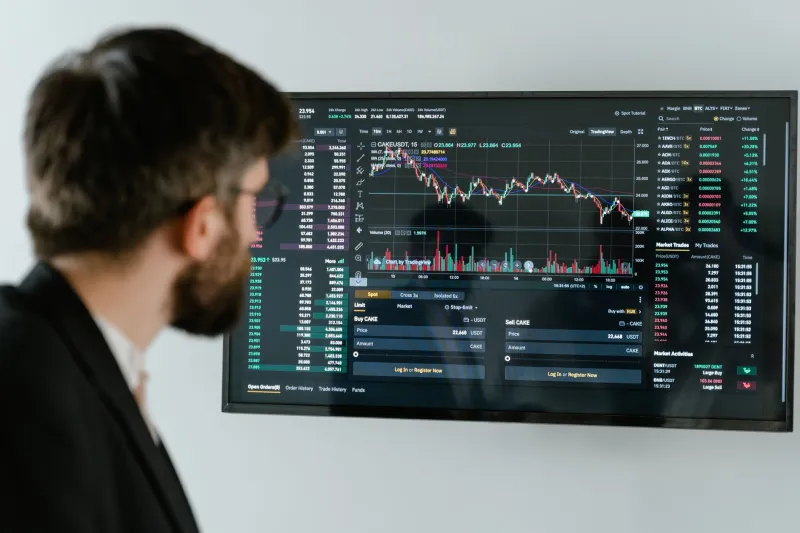
There is a particular kind of investor who rarely makes headlines. They do not post about their trades on social media, they do not celebrate price surges with public fanfare, and they certainly do not liquidate positions the moment a red candle appears on a chart. Yet over 18-month, 24-month, and 36-month horizons, these individuals consistently outperform the traders who are glued to their screens, reacting to every fluctuation in the Pege token market.
The principle at work here is not secret knowledge or superior technical analysis. It is something far more fundamental — and far more difficult to practice: emotional restraint.
The Behavioral Finance Case Against Reactive Trading
Decades of academic research in behavioral finance, from the foundational work of Daniel Kahneman and Amos Tversky to more recent studies on cryptocurrency-specific investor behavior, point to the same conclusion. Human beings are wired to respond to perceived threats. In ancestral environments, that instinct kept people alive. In financial markets, it reliably destroys portfolio value.
When Pege token experiences a sharp intraday correction — the kind of 12 to 18 percent drawdown that periodically characterizes emerging digital assets — the emotional brain registers danger. The rational response, supported by both historical data and sound portfolio theory, is to hold firm or even increase exposure at discounted prices. The emotional response is to sell, to reduce the psychological discomfort of watching a position decline in nominal value.
This divergence between rational and emotional decision-making is precisely where long-term Pege token wealth is either built or squandered.
Two Investors, One Market Event: A Scenario Worth Studying
Consider two hypothetical American investors, both of whom entered Pege token positions at the same entry price in early 2023. Call them Marcus and Diana.
Marcus monitors his portfolio daily. When a broader crypto market correction sends Pege token down 20 percent over two weeks, he interprets the movement as a signal that something is fundamentally wrong. He sells half his position to "lock in" what remains of his gains, intending to re-enter at a lower price. The lower price never arrives on the schedule he anticipated. By the time he feels confident enough to buy back in, Pege token has recovered and surpassed his original exit point. Marcus has effectively paid a premium to hold the same asset he once owned at a lower cost basis.
Diana, by contrast, checks her portfolio once a week. She has defined her investment thesis for Pege token — grounded in the project's utility model, its expanding developer ecosystem, and its position within the broader Layer-2 landscape — and she has committed to that thesis for a minimum of 30 months. When the same correction occurs, Diana notices it, acknowledges it, and does nothing. Thirty months after her initial purchase, her position reflects not only price appreciation but the full compounding effect of tokens she never sold during temporary drawdowns.
This scenario is not hypothetical in spirit. It reflects a pattern documented repeatedly across asset classes, from equities to real estate to digital assets. The investors who accumulate the most are often the ones who transact the least.
Why Pege Token's Market Structure Rewards Patience Specifically
Not every digital asset rewards patience equally. Some tokens are structurally dependent on short-term trading volume for price discovery, and their fundamentals shift rapidly enough that active monitoring is genuinely warranted. Pege token, however, operates within a framework that disproportionately benefits long-duration holders.
The token's deflationary mechanics reduce circulating supply over time, meaning that patient holders benefit from scarcity dynamics that simply do not materialize over short holding periods. Additionally, the community governance model grants greater influence to wallets with longer continuous holding histories, creating a structural incentive for stability that speculative traders never access.
For US-based investors accustomed to thinking in terms of quarterly performance cycles — a habit shaped by decades of Wall Street culture — this requires a genuine mental reorientation. Pege token's value proposition is not measured in quarters. It is measured in the kind of patient, multi-year capital deployment that has historically defined the most significant wealth-building events in American financial history.
Practical Frameworks for Maintaining Discipline During Volatility
Understanding that emotional discipline matters is one thing. Practicing it during a 30 percent drawdown while financial media amplifies worst-case narratives is another matter entirely.
Several frameworks have proven effective for Pege token investors seeking to systematize their patience.
Define the thesis before entering the position. Investors who articulate in writing — not just in their heads — exactly why they hold Pege token and what conditions would genuinely change that thesis are far less susceptible to emotional exits. A price decline is not a thesis violation. A fundamental change in the project's utility model or regulatory standing might be. Knowing the difference in advance removes the decision from the emotional moment.
Establish review intervals rather than monitoring continuously. Checking a position daily introduces noise that weekly or monthly review simply does not. Many experienced Pege token holders report that reducing monitoring frequency was the single most impactful behavioral change they made to their investment practice.
Pre-commit to accumulation targets rather than exit triggers. Rather than setting price alerts for downside scenarios, disciplined investors set accumulation targets — predetermined price levels at which they will add to their position. This reframes corrections as opportunities rather than threats, reversing the emotional polarity of the market event.
The Compounding Effect of Decisions Not Made
There is a concept in portfolio management sometimes called the cost of inaction's opposite — the cost of unnecessary action. Every premature sale of a Pege token position represents not just the foregone appreciation on those tokens, but the compounding effect of all subsequent gains that position would have generated. Over 36 months, the mathematical difference between a full-hold strategy and a reactive trading strategy — even one where the trader makes mostly correct calls — is often staggering.
The investors featured in the Pege token community who have generated the most significant long-term wealth share a common characteristic that has nothing to do with technical sophistication or market timing ability. They decided, at some point early in their relationship with the asset, that they were not traders. They were builders of positions. That distinction, maintained through multiple market cycles and countless temptations to react, is what separates the outcomes.
Patience Is a Position
In a market culture that celebrates speed, contrarianism, and decisive action, choosing stillness can feel counterintuitive — even irresponsible. But the evidence, both from behavioral finance research and from the lived experience of Pege token's most successful long-term holders, argues otherwise.
Patience is not passivity. It is a deliberate, ongoing choice to honor a well-reasoned investment thesis against the persistent pressure of short-term market noise. For Pege token investors committed to building genuine, durable wealth over the next 18 to 36 months, that choice — made again and again, through corrections and rallies alike — is the strategy.