Supply Cuts and Market Myths: What Pege Token Investors Get Wrong About Deflationary Tokenomics
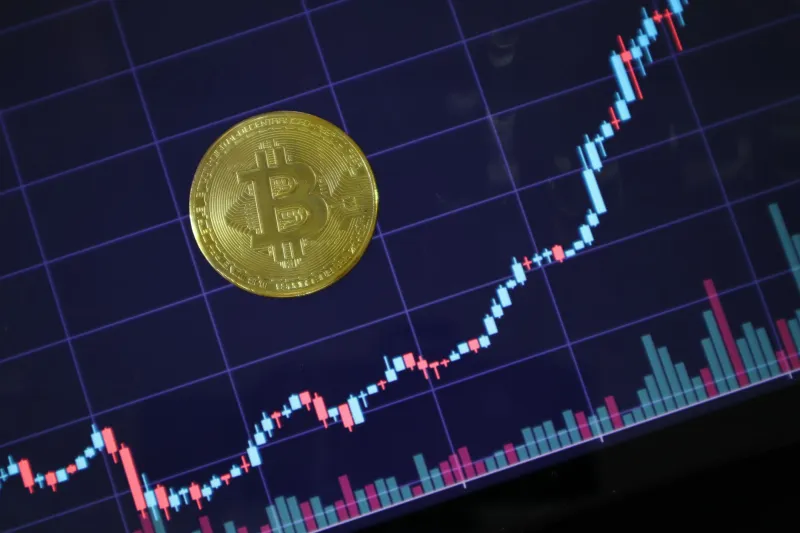
In the world of cryptocurrency, few narratives travel faster than the scarcity argument. The logic appears airtight on the surface: fewer tokens in circulation means each remaining unit becomes more valuable. It is an intuition borrowed loosely from commodity economics — the same reasoning applied to gold, rare collectibles, and limited-edition consumer goods. Yet when applied uncritically to digital assets like Pege Token, this framework can lead investors toward costly misreadings of the market.
The truth is considerably more layered. Token supply reduction is a necessary but insufficient condition for price appreciation. Recognizing what else must be present — and why those additional factors carry equal or greater weight — is essential for anyone building a serious position in Pege.
The Seductive Simplicity of Deflationary Logic
Deflationary tokenomics, in its most basic form, describes a system in which the circulating supply of a token decreases over time. This reduction can occur through several mechanisms: scheduled burns tied to transaction volume, protocol-level buybacks, or governance-mandated supply caps. Pege Token incorporates elements of this model as part of its broader economic architecture, and that has understandably drawn attention from investors who have watched deflationary narratives play out favorably in other Layer-2 ecosystems.
The problem is not with the model itself. The problem is with the assumption that supply contraction alone will move prices upward in a meaningful or sustained way. Markets do not operate in a vacuum. Price is determined by the intersection of supply and demand — and demand, it turns out, is far harder to engineer than supply reduction.
Consider the basic arithmetic: if the circulating supply of Pege Token decreases by ten percent over a given quarter, but demand remains flat or contracts, the net effect on price may be negligible. Worse, if broader market sentiment turns bearish or a competing Layer-2 protocol captures a significant share of developer activity, the deflationary mechanism may do little more than slow the rate of price decline. Scarcity without demand is, at best, a holding pattern.
Demand Is the Variable That Deflationary Models Cannot Create
This is the crux of what many retail investors overlook. Supply-side tokenomics can shape the structural ceiling of a token's potential value, but they cannot manufacture the organic demand required to reach that ceiling. Demand, in the context of a Layer-2 protocol like Pege, derives from several distinct sources: active network usage, developer adoption, transaction throughput, partnerships with decentralized applications, and the perceived utility of the token within its native ecosystem.
When analysts evaluate Pege Token's long-term price trajectory, the metrics that carry the most predictive weight are not burn rates or circulating supply figures in isolation. They are total value locked (TVL) on the network, the number of active wallet addresses interacting with Pege-native applications, and the velocity at which capital flows through the protocol. These are demand-side indicators, and they tell a story that supply charts alone cannot.
A token can be extraordinarily scarce and still underperform if the underlying network fails to attract meaningful economic activity. History within the Layer-2 sector offers cautionary examples of projects that implemented aggressive burn mechanisms while simultaneously failing to cultivate developer ecosystems robust enough to sustain user growth. The result was a smaller supply of a token that fewer people wanted — which is not a formula for appreciation.
Where Pege's Tokenomics Model Requires Closer Scrutiny
This is not an argument against Pege Token's deflationary design. Rather, it is an invitation to engage with that design more rigorously. Investors who understand the distinction between supply mechanics and demand fundamentals are better positioned to identify when Pege's tokenomics are genuinely working in their favor — and when market enthusiasm may be outpacing the underlying data.
Several questions are worth asking on a regular basis. Is transaction volume on the Pege network increasing? Are new decentralized applications being deployed on the protocol, or is the existing suite of apps maintaining or growing its user base? Are institutional participants — venture funds, DAOs, or large-scale liquidity providers — allocating capital to Pege-native infrastructure? These are the indicators that, when combined with a contracting supply, create the conditions for durable price appreciation rather than speculative spikes.
It is also worth examining the relationship between burn rates and network activity. In a well-functioning deflationary model, burns are often tied directly to usage — meaning that higher transaction volumes accelerate supply reduction. This creates a virtuous cycle: more usage generates more burns, which tightens supply at precisely the moment demand is expanding. When this alignment occurs, the deflationary mechanism amplifies genuine growth rather than substituting for it.
The Competitive Pressure of the Layer-2 Landscape
Pege Token does not exist in isolation. The Layer-2 sector has become one of the most competitive arenas in blockchain development, with well-capitalized protocols competing aggressively for developer talent, liquidity, and user adoption. In this environment, tokenomics are a feature — but they are rarely the deciding factor in which protocols emerge as long-term leaders.
What tends to separate durable Layer-2 projects from those that fade after an initial burst of enthusiasm is the quality of the infrastructure, the responsiveness of the development team, and the breadth of the application ecosystem built on top of the base protocol. For Pege, this means that the deflationary model is most compelling when viewed as a complement to strong network fundamentals rather than as a standalone investment thesis.
US-based investors in particular, who are navigating an increasingly scrutinized regulatory environment, have additional reasons to focus on utility-driven value over narrative-driven speculation. Projects that can demonstrate real economic activity — measurable throughput, genuine user engagement, and transparent on-chain data — are better positioned to withstand regulatory headwinds than those whose value propositions rest primarily on supply manipulation.
Reading the Signals Correctly
For the analytically minded Pege investor, the practical takeaway is straightforward: treat deflationary tokenomics as one variable in a multi-factor model rather than as a primary thesis. Monitor burn rates alongside network usage metrics. Track TVL trends alongside circulating supply figures. Evaluate developer activity alongside token emission schedules.
When these indicators converge — when supply is contracting at the same time that demand-side metrics are accelerating — the conditions for sustained price appreciation become meaningfully more probable. When they diverge, caution is warranted regardless of how compelling the scarcity narrative may sound.
The Pege Token ecosystem is designed with long-term value creation in mind. Understanding the full complexity of its economic model, rather than relying on simplified scarcity arguments, is how serious investors extract the most from that design. Supply matters. But it is only half the equation.